



Serving West LA & Beverly Hills
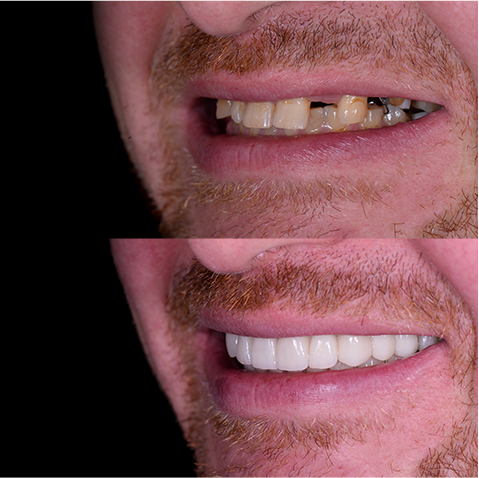
Full Upper or Lower set of Zirconia Teeth Permanently Secured on 4 Implants Advanced Digital Technology • 0% Financing Available
$110 per month
Limited-Time Offer
Experience
Implants
Prime Location
Oral Surgeons
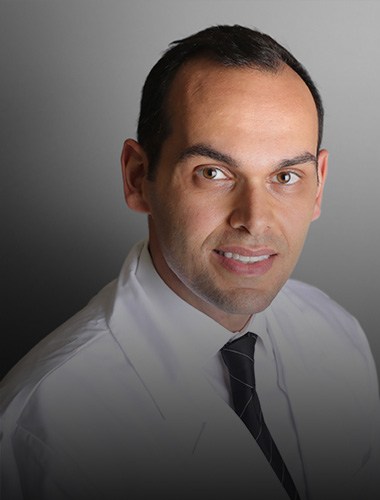
Written by Dr. Jonathan R. Shadi, DDS, Oral & Maxillofacial Surgeon
Tooth loss affects more than your appearance — it changes how you eat, speak, and carry yourself every day. When a tooth is missing, the jawbone beneath it begins to deteriorate, surrounding teeth shift, and over time the entire bite can be compromised. Dental implants are the only tooth replacement option that addresses all of these consequences at once, replacing not just the visible crown but the root itself.
Dr. Jonathan R. Shadi and Dr. Saman Vahedi are board-certified oral and maxillofacial surgeons with advanced training in implant dentistry. Dr. Shadi earned his degree from the USC School of Dentistry and completed an OMFS internship at the Veterans’ Affairs Hospital in Long Beach and his OMFS residency at UCSF–Fresno, while Dr. Vahedi is a Diplomate of the American Board of Oral and Maxillofacial Surgeons who completed his residency at the University of Nebraska Medical Center, where he served as Chief Resident.
A dental implant is a small titanium post surgically placed into the jawbone at the site of a missing tooth. Titanium is used because of its unique ability to fuse directly with living bone through a process called osseointegration. Over a healing period of approximately three to six months, the jawbone grows around and integrates with the implant surface, creating a stable foundation that functions like a natural tooth root.
Once osseointegration is complete, a connector piece called an abutment is attached to the implant post. Your restorative dentist then places a custom-made crown on top of the abutment. The result is a replacement tooth that looks, feels, and functions like the tooth it replaced. Because the implant stimulates the jawbone the way a natural root does, it also helps prevent the bone loss that typically follows tooth extraction. According to the National Institutes of Health, osseointegrated dental implants have demonstrated long-term success rates of over 90% in clinical studies.
At Wilshire Oral Surgery and Implant Center, our surgeons place several types of implant restorations depending on how many teeth are missing and your overall oral health:
Your implant journey begins with a comprehensive evaluation that includes cone-beam 3D imaging. This technology allows our surgeons to assess your bone density and anatomy with precision, plan the exact placement of each implant, and anticipate any anatomical factors before surgery begins.
If bone volume is insufficient to support an implant, a bone grafting procedure may be recommended first to rebuild the site. Bone grafts are a routine part of implant preparation and do not disqualify a patient from receiving implants. We also offer Platelet Rich Fibrin (PRF) therapy, which uses your body’s own growth factors to accelerate healing after grafting or implant placement.
On the day of your surgery, our team administers anesthesia and sedation appropriate to your procedure and comfort level. We offer IV sedation and general anesthesia for patients who prefer to be completely at ease — learn more about IV sedation and general anesthesia options. The implant post is then placed into the prepared site with precision guided by your pre-surgical imaging.
Dental implants offer advantages that other tooth replacement options cannot match. Dentures and bridges restore the appearance of a full smile, but they sit on top of or attach to the gum and bone rather than replacing the root. This means they do not prevent the bone resorption that occurs after tooth loss, which can cause the jaw to shrink over time and change the shape of the face.
| Dental Implants | Dentures / Bridges | |
|---|---|---|
| Prevents bone loss | Yes | No |
| Fixed in place | Yes | Removable / may slip |
| Can develop decay | No | Yes (bridges) |
| Lifespan | Lifetime with care | 5–15 years |
| Affects adjacent teeth | No | Yes (bridges require grinding) |
Dental implants provide the stimulation the jawbone needs to maintain its density and volume. They do not require removal for cleaning, cannot develop decay, and with proper oral hygiene can last decades or a lifetime. Patients who choose implants typically report improvements in their ability to eat the foods they want, speak clearly, and smile confidently.
The cost of dental implant treatment varies depending on the number of implants needed, whether preparatory procedures such as bone grafting or extractions are required, and the type of restoration placed. We provide individualized treatment plans after a thorough examination rather than quoting a flat fee.
While the upfront cost of implants is higher than dentures or bridges, the long-term value is considerable. Dentures and bridges need periodic replacement and professional maintenance, whereas a well-placed implant is designed to last permanently. We serve dental implant patients from across the Westside, including West Los Angeles, Santa Monica, Century City, Westwood, Brentwood, Culver City, Sawtelle, Mar Vista, and Palms. We offer financing information on our payment options page, and patients with dental benefits can find insurance information at our Insurance & Finance page.
Advanced 3D imaging and computer-guided surgery for perfect implant placement every time.
Walk in with missing teeth, walk out with a beautiful, permanent smile in just 24 hours.
Premier oral surgery practice serving Beverly Hills, Santa Monica, and West LA communities.
Zirconia restorations that won’t stain, scratch, or fracture – guaranteed for life.
IV sedation and general anesthesia options for completely comfortable treatment.
No hidden fees. 0% financing available. Insurance accepted and maximized.
Oral & Maxillofacial Surgeon
A UCLA graduate (B.S. Neuroscience) who earned his DDS at the USC School of Dentistry, Dr. Shadi completed his oral and maxillofacial surgery residency at UCSF–Fresno in 2014. His practice focuses on single and complex dental implant surgery, bone grafting, wisdom teeth removal, and in-office IV anesthesia.
Board Certified Oral & Maxillofacial Surgeon
A Diplomate of the American Board of Oral and Maxillofacial Surgeons, Dr. Vahedi earned his DDS at the Herman Ostrow School of Dentistry of USC and completed his residency at the University of Nebraska Medical Center, where he served as Chief Resident in 2013–2014. He performs single and complex dental implant surgery, bone grafting, corrective jaw surgery, and facial trauma care.
From $9,990
From $12,990
From $2,500
From $4,650
Custom Quote
Dr Vahedi was great. I had my two sons have their wisdom teeth removed. Both sons 17 and 21 had minor pain after the surgery. Very professional and answered all ur questions. Highly recommend. The staff Stephanie and Andria I think were fantastic, very helpful and answered all ur questions.
Dr. Vahedi removed my 8-year old’s supernumerary tooth yesterday, and so far we are very pleased with the result and the overall process. All the staff were very professional, from the front desk to the nurses to Dr. Vahedi. They helped my daughter feel comfortable in what would otherwise be a very stressful process for a child. Thank you!
I was given a referral from my dentist to see Dr. Shadi. I didn’t know what to expect at first because of where his office was, 23 miles from my home. I was reluctant at first because of the travel distance but after meeting the office and Dr. Shadi for the first time, I had no second thoughts and scheduled my appointment for an Implant. Both the staff and Doctor were very professional. The implant was a success with zero complications. I would truly recommend Wilshire Oral Surgery for your dental needs. Thank you Doc!
Everything was explained. All treatment options. What to expect during procedure and recovery. Staff very helpful. Very clean and modern offices. I would highly recommend
The office gave my daughter an appointment with within a very reasonable time. On day of appointment they saw her on time, explained the procedure and after are in detail. All staff including the dentist were extremely empathetic and supportive of my daughter. Surgeon personally called and followed up with us after she had her wisdom teeth pulled. Everyone was extremely sweet and compassionate to our needs. Will recommend this office to others.
Had all of my wisdom teeth extracted at once here. The cost was affordable (compared to competitors) and the surgery was only around 30 minutes. I opted for PRF which greatly helped the healing process – I healed in about 4-5 days. Can’t recommend them enough, they have such a friendly group of office staff and surgeons.
Schedule your free consultation at our West LA location today
Limited-time offer • 0% financing available • Insurance accepted
We use cookies to improve your experience on our site. By using our site, you consent to cookies.
Manage your cookie preferences below:
Essential cookies enable basic functions and are necessary for the proper function of the website.
CloudFlare provides web performance and security solutions, enhancing site speed and protecting against threats.
Service URL: developers.cloudflare.com (opens in a new window)
These cookies are needed for adding comments on this website.
Google reCAPTCHA helps protect websites from spam and abuse by verifying user interactions through challenges.
Google Tag Manager simplifies the management of marketing tags on your website without code changes.
Statistics cookies collect information anonymously. This information helps us understand how visitors use our website.
Google Analytics is a powerful tool that tracks and analyzes website traffic for informed marketing decisions.
Service URL: policies.google.com (opens in a new window)
Marketing cookies are used to follow visitors to websites. The intention is to show ads that are relevant and engaging to the individual user.
Google Maps is a web mapping service providing satellite imagery, real-time navigation, and location-based information.
Service URL: policies.google.com (opens in a new window)
Meet Us
Patient Center