


Serving West LA & Beverly Hills
Four levels of sedation and anesthesia so every patient can receive oral surgery in complete comfort.
Experience
One Trusted Team
Prime Location
Oral Surgeons
Dental anxiety is one of the most common reasons people delay the oral surgery they need. When this kind of care is required, skipping it can make things even worse. That’s why it’s important to find a provider who understands your anxiety and works to keep you comfortable throughout any treatment.
At Wilshire Oral Surgery and Implant Center, we believe fear should never stand between you and a healthy, pain-free mouth. We offer four levels of sedation and anesthesia so every patient, regardless of anxiety level or procedure complexity, can receive oral surgery in complete comfort. Dr. Jonathan R. Shadi and Dr. Saman Vahedi completed their oral and maxillofacial surgery residencies at top academic medical centers, where their training included a dedicated four to six month anesthesia rotation working directly alongside anesthesiologists and nurse anesthetists.
Oral and maxillofacial surgeons are the only healthcare providers outside of anesthesiologists trained to administer every level of sedation and general anesthesia in an office setting, a distinction that comes from residency training spent working alongside anesthesiology teams. Every patient is different, and no single approach fits everyone.
During your consultation, we review your medical history, the nature of your procedure, your anxiety level, and your personal preferences before recommending the right option for you, which may include:
Choosing the right option starts with an honest conversation about what you need to feel comfortable, and we never pressure you toward a particular level of sedation.
Sedation may help if you experience dental anxiety or phobia, a strong gag reflex, sensitivity to dental sounds or sensations, a lengthy or multi-step procedure, past trauma from a dental visit even long ago, or difficulty getting numb with local anesthesia alone.
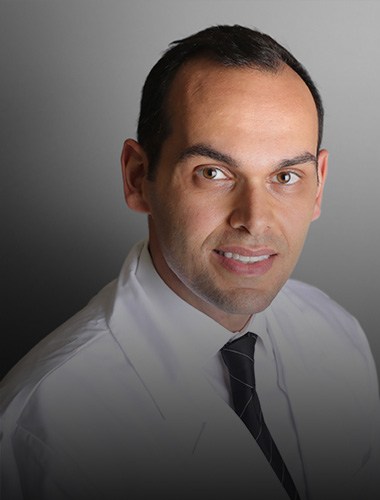
Board Certified Oral & Maxillofacial Surgeon
Double board-certified in Oral & Maxillofacial Surgery and Medicine. Fellowship trained in complex reconstructive surgery. Over 15 years serving the West LA community with advanced implant dentistry and oral surgery procedures.
Prosthodontist &
Implant Specialist
Specialized in full-mouth reconstruction and cosmetic dentistry. Expert in All-On-4 and complex implant cases. Has completed over 5,000 successful implant procedures with immediate loading protocols.
Dr Vahedi was great. I had my two sons have their wisdom teeth removed. Both sons 17 and 21 had minor pain after the surgery. Very professional and answered all ur questions. Highly recommend. The staff Stephanie and Andria I think were fantastic, very helpful and answered all ur questions.
Dr. Vahedi removed my 8-year old’s supernumerary tooth yesterday, and so far we are very pleased with the result and the overall process. All the staff were very professional, from the front desk to the nurses to Dr. Vahedi. They helped my daughter feel comfortable in what would otherwise be a very stressful process for a child. Thank you!
I was given a referral from my dentist to see Dr. Shadi. I didn’t know what to expect at first because of where his office was, 23 miles from my home. I was reluctant at first because of the travel distance but after meeting the office and Dr. Shadi for the first time, I had no second thoughts and scheduled my appointment for an Implant. Both the staff and Doctor were very professional. The implant was a success with zero complications. I would truly recommend Wilshire Oral Surgery for your dental needs. Thank you Doc!
Everything was explained. All treatment options. What to expect during procedure and recovery. Staff very helpful. Very clean and modern offices. I would highly recommend
The office gave my daughter an appointment with within a very reasonable time. On day of appointment they saw her on time, explained the procedure and after are in detail. All staff including the dentist were extremely empathetic and supportive of my daughter. Surgeon personally called and followed up with us after she had her wisdom teeth pulled. Everyone was extremely sweet and compassionate to our needs. Will recommend this office to others.
Had all of my wisdom teeth extracted at once here. The cost was affordable (compared to competitors) and the surgery was only around 30 minutes. I opted for PRF which greatly helped the healing process – I healed in about 4-5 days. Can’t recommend them enough, they have such a friendly group of office staff and surgeons.
Schedule your free consultation at our West LA location today
We use cookies to improve your experience on our site. By using our site, you consent to cookies.
Manage your cookie preferences below:
Essential cookies enable basic functions and are necessary for the proper function of the website.
CloudFlare provides web performance and security solutions, enhancing site speed and protecting against threats.
Service URL: developers.cloudflare.com (opens in a new window)
These cookies are needed for adding comments on this website.
Google reCAPTCHA helps protect websites from spam and abuse by verifying user interactions through challenges.
Google Tag Manager simplifies the management of marketing tags on your website without code changes.
Statistics cookies collect information anonymously. This information helps us understand how visitors use our website.
Google Analytics is a powerful tool that tracks and analyzes website traffic for informed marketing decisions.
Service URL: policies.google.com (opens in a new window)
Marketing cookies are used to follow visitors to websites. The intention is to show ads that are relevant and engaging to the individual user.
Google Maps is a web mapping service providing satellite imagery, real-time navigation, and location-based information.
Service URL: policies.google.com (opens in a new window)
Meet Us
Patient Center