
Serving West LA & Beverly Hills
Zygomatic Implants
A permanent solution for severe upper jaw bone loss, anchored in the cheekbone instead of the jaw.
15+ Years
Experience
Full-Scope Surgical Care
One Trusted Team
West LA
Prime Location
Board Certified
Oral Surgeons
Zygomatic Implants in Los Angeles, CA
Losing significant bone in the upper jaw can feel like it closes the door on dental implants altogether. If a previous doctor has told you that you do not have enough bone to support a traditional implant, or that extensive grafting would be needed before treatment could even begin, you may be wondering whether a stable, permanent solution is still possible.
At Wilshire Oral Surgery and Implant Center, we offer dental implants for patients across the full range of bone loss, including zygomatic implants for those with the most severe upper jaw atrophy. Dr. Jonathan Shadi and Dr. Saman Vahedi are board-certified oral and maxillofacial surgeons who use advanced cone beam 3D imaging to plan every case with precision, so you get an accurate picture of your options before any treatment ever begins.
What Are Zygomatic Implants?
Zygomatic implants are longer, specially designed implants that anchor into the zygomatic bone, more commonly known as the cheekbone, rather than the upper jawbone itself. This bone remains dense and stable even after significant loss in the maxilla, giving the implant a strong foundation without relying on the jaw at all.
Since the cheekbone rarely resorbs the way the upper jaw does, zygomatic implants can often support a full prosthesis immediately after placement in appropriate cases. This strategy was developed specifically for patients who have run out of viable options in the upper jaw, and it has become a well-documented solution over several decades of clinical use.
Who Zygomatic Implants Are For
Zygomatic implants are intended for those with severe upper jaw bone loss who can’t have conventional bone grafting or would face a long and uncertain path if they did. This may include patients who have worn dentures for many years, experienced trauma to the upper jaw, or had previous implants fail due to insufficient bone.
You may be a candidate if you have been told any of the following applies to your case:
If you fall into one or more of these categories, a consultation can help clarify whether zygomatic implants, or another option, fits your specific anatomy and goals.
How Zygomatic Implants Differ From Standard and Pterygoid Implants
Standard dental implants rely on the alveolar bone of the jaw itself, which means they generally require enough width and height in that bone to place the implant securely. When that bone has significantly deteriorated, patients are often told they need bone grafting, sinus lifts, or other procedures to rebuild the area before an implant can even be considered.
Zygomatic implants bypass this requirement entirely by engaging the cheekbone instead. This makes them appropriate for cases where the upper jaw bone is too thin, too short, or too compromised for a standard implant to succeed, even with grafting.
Pterygoid implants address a related but distinct problem. These implants anchor into the pterygoid plate at the back of the upper jaw, which helps support implants in the posterior region when the back of the maxilla lacks sufficient bone. Zygomatic implants and pterygoid implants are sometimes used together in the same treatment plan, particularly in cases of widespread bone loss across the entire upper arch, since each addresses a different area of the jaw.
| Dimension | Standard Implants | Zygomatic Implants |
|---|---|---|
| Anchor point | Upper jaw (alveolar) bone | Cheekbone (zygoma) |
| Bone loss tolerance | Requires adequate jaw bone volume | Works even with severe atrophy |
| Grafting typically needed | Often, in cases of bone loss | Rarely required |
| Implant length | Standard length | Longer, angled placement |
Procedure Overview
Treatment begins with a thorough evaluation, including cone beam 3D imaging, to map the exact shape and density of your zygomatic bone and confirm that this approach is appropriate for your anatomy. This imaging allows us to plan implant angulation and length with precision before you are ever in the surgical chair.
The implants themselves are longer than standard implants, often spanning from the upper jaw ridge to the cheekbone at an angle. Placement is performed under IV sedation or general anesthesia, and in many cases, a temporary or final prosthesis can be attached the same day, giving you a functional set of teeth without a lengthy waiting period. A published systematic review found zygomatic implants reach a cumulative success rate of 96.1% after more than five years of follow-up, which reflects the strong long-term track record of this approach when patients are properly selected and the procedure is planned carefully.
A Last-Resort Solution That Avoids Extensive Grafting
We view zygomatic implants as a last-resort solution reserved for patients who have exhausted other options, not a first-line treatment. If a standard implant with modest grafting can achieve a stable, long-lasting result, we will recommend that route first, since it is generally simpler and involves a shorter recovery.
Zygomatic implants exist for patients who do not have that choice. When severe bone loss has ruled out conventional grafting, or when previous grafting attempts have already failed, this method offers a way to move forward with a fixed, functional set of teeth without months or years of preparatory bone-building surgery. Same-day surgery and IV sedation are both available for qualifying patients, which can make the entire process more manageable from start to finish.
Frequently Asked Questions
What are zygomatic implants used for?
Zygomatic implants anchor into the cheekbone instead of the upper jaw, making them an option for patients with severe upper jaw bone loss who are not candidates for conventional implants or grafting.
How do zygomatic implants differ from standard dental implants?
Standard implants anchor in the upper jawbone and generally require adequate bone volume. Zygomatic implants anchor in the cheekbone, which stays dense even after significant jaw bone loss, so grafting is rarely needed.
Can I get a full set of teeth the same day as surgery?
In many appropriate cases, yes. Because zygomatic implants anchor in dense cheekbone, a temporary or final prosthesis can often be attached the same day as placement.
What is the success rate of zygomatic implants?
A published systematic review found zygomatic implants reach a cumulative success rate of 96.1% after more than five years of follow-up when patients are properly selected and the procedure is carefully planned.
What is the difference between zygomatic and pterygoid implants?
Zygomatic implants anchor into the cheekbone, while pterygoid implants anchor into the pterygoid plate at the back of the upper jaw. They are sometimes used together to address widespread bone loss across the entire upper arch.
Are zygomatic implants a first-choice treatment?
No. We view zygomatic implants as a last-resort solution for patients who have exhausted other options. If a standard implant with modest grafting can achieve a stable result, we recommend that route first.
Meet Your West LA Oral Surgery Team

Dr. Vahedi, DDS, MD
Board Certified Oral & Maxillofacial Surgeon
Double board-certified in Oral & Maxillofacial Surgery and Medicine. Fellowship trained in complex reconstructive surgery. Over 15 years serving the West LA community with advanced implant dentistry and oral surgery procedures.
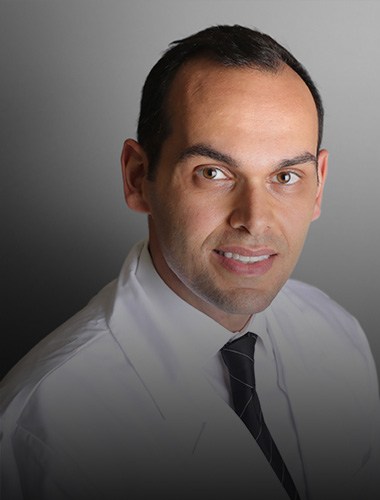
Dr. Shadi, DDS, MD
Prosthodontist &
Implant Specialist
Specialized in full-mouth reconstruction and cosmetic dentistry. Expert in All-On-4 and complex implant cases. Has completed over 5,000 successful implant procedures with immediate loading protocols.
Dr Vahedi was great. I had my two sons have their wisdom teeth removed. Both sons 17 and 21 had minor pain after the surgery. Very professional and answered all ur questions. Highly recommend. The staff Stephanie and Andria I think were fantastic, very helpful and answered all ur questions.

David D.
Dr. Vahedi removed my 8-year old’s supernumerary tooth yesterday, and so far we are very pleased with the result and the overall process. All the staff were very professional, from the front desk to the nurses to Dr. Vahedi. They helped my daughter feel comfortable in what would otherwise be a very stressful process for a child. Thank you!
Rebecca C.
I was given a referral from my dentist to see Dr. Shadi. I didn’t know what to expect at first because of where his office was, 23 miles from my home. I was reluctant at first because of the travel distance but after meeting the office and Dr. Shadi for the first time, I had no second thoughts and scheduled my appointment for an Implant. Both the staff and Doctor were very professional. The implant was a success with zero complications. I would truly recommend Wilshire Oral Surgery for your dental needs. Thank you Doc!
John E.
Everything was explained. All treatment options. What to expect during procedure and recovery. Staff very helpful. Very clean and modern offices. I would highly recommend
Brian B.
The office gave my daughter an appointment with within a very reasonable time. On day of appointment they saw her on time, explained the procedure and after are in detail. All staff including the dentist were extremely empathetic and supportive of my daughter. Surgeon personally called and followed up with us after she had her wisdom teeth pulled. Everyone was extremely sweet and compassionate to our needs. Will recommend this office to others.
Vanessa G.
Had all of my wisdom teeth extracted at once here. The cost was affordable (compared to competitors) and the surgery was only around 30 minutes. I opted for PRF which greatly helped the healing process – I healed in about 4-5 days. Can’t recommend them enough, they have such a friendly group of office staff and surgeons.
Sabrina C.
Our Reviews
Ready To Transform Your Smile?
Schedule your free consultation at our West LA location today