
West LA’s board-certified oral and maxillofacial surgeons.
Call or request an appointment to schedule your consultation.
Choosing an oral surgery practice is about more than the procedure you need. It is about the precision behind every diagnosis, the comfort built into every visit, and the outcomes that follow you home. Advanced technology shapes each of those factors, from the first scan that reveals your jaw structure to the final scan that confirms your implant is positioned as planned. Patients considering wisdom teeth removal, dental implants, or any oral surgical procedure deserve to know what tools their surgeon relies on.
At Wilshire Oral Surgery and Implant Center, we built our West Los Angeles practice around the idea that better technology leads to better care. Our board-certified surgeons use advanced diagnostic and treatment technology throughout every stage of your visit, supporting the patient information we provide before, during, and after your procedure. Whether you are exploring wisdom teeth removal, dental implants, or periodontal treatment, we select equipment to make your experience more precise.
Cone beam computed tomography, or CBCT, captures a full three-dimensional image of your jaw, teeth, and surrounding nerve pathways in a single scan. Unlike traditional X-rays, this imaging shows the position of impacted teeth, bone density, and the location of critical nerves before any instrument touches your mouth. A 2021 systematic review hosted by the National Library of Medicine found that three-dimensional imaging gives a distortion-free view of the implant site and recommended low-dose CBCT settings when 3D imaging is needed. Learn more about our cone beam 3D imaging.
This insight allows us to plan your surgery with confidence rather than guesswork, reducing surprises and supporting a smoother recovery. For wisdom teeth removal, 3D imaging helps identify how close a tooth sits to the inferior alveolar nerve, informing decisions that help protect your long-term sensation.
Digital X-rays replace older film-based systems with instant, high-resolution images that appear on screen within seconds, meaning less waiting and a clearer picture your surgeon can review without delay. They also use less radiation than conventional film, which matters to patients who want thorough diagnostics without unnecessary exposure.
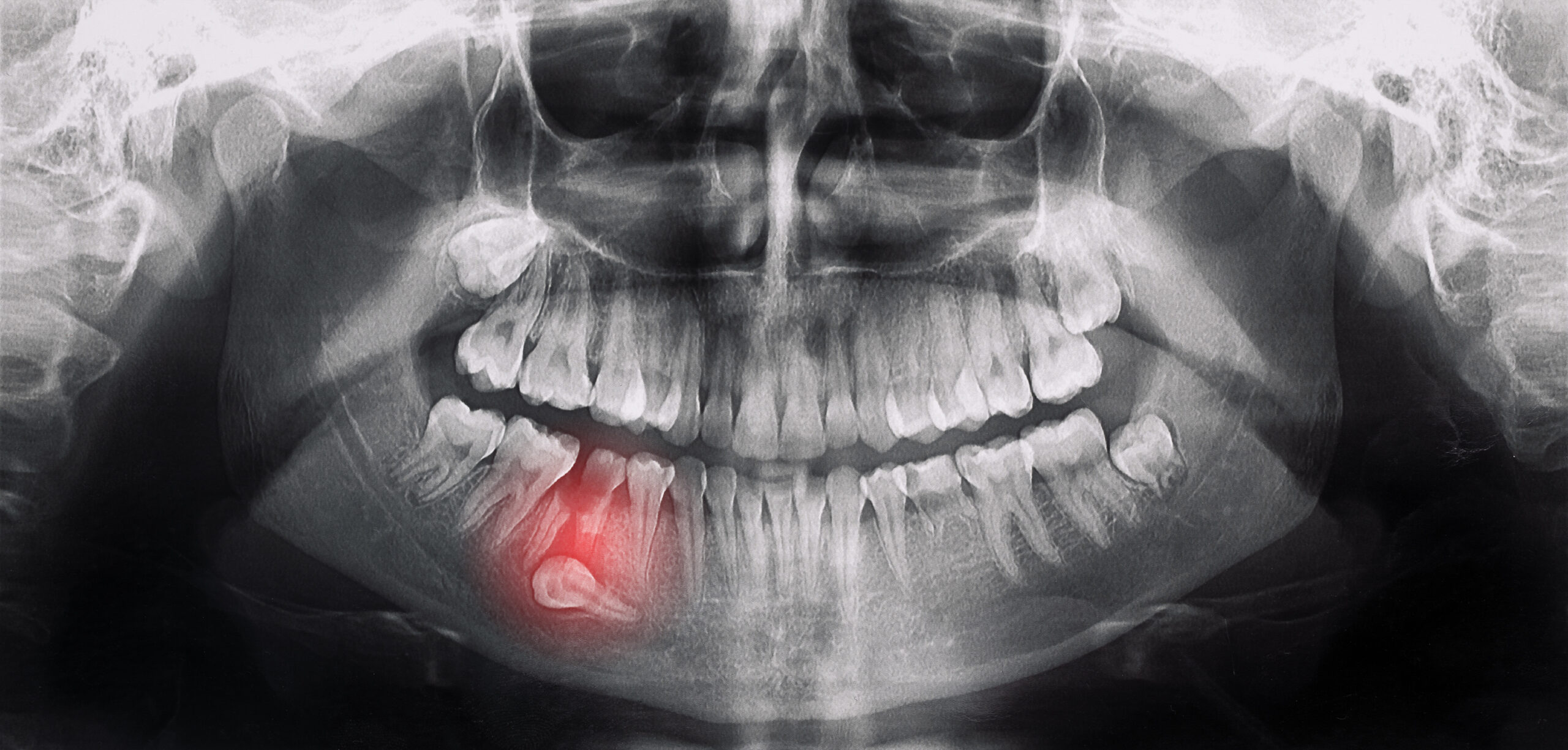
Because these images transfer instantly between our team and your referring dentist, coordination becomes simpler. This is especially valuable for dental implants, where precise bone measurements directly affect implant placement.
Digital scanners such as iTero and TRIOS capture a detailed digital impression of your teeth and gums without the trays or putty traditional impressions require. The scanner glides over your teeth and builds a precise 3D model on screen in real time, giving you and your surgeon an immediate view of your bite and alignment.
| Comparison | Digital Scanner | Traditional Impression |
|---|---|---|
| What is used | A handheld scanner | Trays and putty |
| What you get | A 3D model on screen in real time | A physical mold |
| Patient experience | Faster and more comfortable | Can be difficult for some patients |
This makes the impression process faster and more comfortable, particularly for patients who have struggled with traditional molds. The digital model also feeds directly into treatment planning for implants and other restorative work.
An intraoral camera is a small, pen-sized device that captures close-up images inside your mouth and displays them on a chairside monitor in real time. Instead of relying on a verbal description, you can view the exact image your surgeon is examining, whether that is a healing extraction site or an erupting tooth.
This transparency helps you understand your treatment recommendations and feel more confident in your care decisions, while helping our team document your progress accurately over time.
CAD/CAM, or computer-aided design and manufacturing, lets our team design certain restorative components digitally instead of sending impressions to an outside lab and waiting days for results. Digital scans convert directly into precise specifications, significantly shortening turnaround time.
For eligible patients, this technology supports same-day treatment planning that reduces the number of visits required, meaning less time away from work or family commitments.
Sprintray dental 3D printing lets our team produce surgical guides and other treatment aids in our office using digital scan data. A printed surgical guide is built to the specifications generated from your CBCT and digital scans, improving the accuracy of implant placement and other guided procedures.
CBCT Scan
A 3D image of your jaw, teeth, and nerves.
Digital Scan
A digital impression of your teeth and gums.
Digital Plan
Both sets of data generate your guide specifications.
In-Office Printing
Your surgical guide is printed on site.
In-office printing also means these components are often ready faster than outsourced alternatives, keeping your treatment timeline on track for dental implant cases where a precisely fitted guide can influence long-term success.
VELscope is a screening technology that uses a dedicated light to detect changes in oral tissue that may not be visible during a standard visual exam. The device highlights variations in tissue fluorescence that can indicate early abnormalities, giving our surgeons another layer of information beyond what the eye alone can catch.
Early detection is one of the most important factors in successfully treating oral tissue abnormalities, which is why we include this screening in every thorough evaluation.
LANAP, or laser-assisted new attachment procedure, uses a specific laser wavelength to treat gum disease by targeting infected tissue while preserving the surrounding healthy tissue. This selective approach differs from traditional gum surgery, which typically involves cutting and suturing a larger area of the gum line.
Because LANAP is less invasive, many patients experience less discomfort and return to normal activity faster. For patients being evaluated for guided tissue regeneration, laser therapy can be an important part of treating gum and bone loss.
Our surgical team also uses PRF therapy to complement this technology, using your own blood platelets to support faster healing after extractions, implants, and other surgical procedures.
Patients often ask how our equipment works and what it means for their visit. Here are answers to the most common questions.
A CBCT scan captures a full three-dimensional image of your jaw, teeth, and surrounding nerve pathways in a single scan. Traditional X-rays show a flatter view, so CBCT gives your surgeon more detail about impacted teeth, bone density, and nerve location before surgery begins.
Imaging decisions depend on your case. When a 3D scan is helpful, it can show how close a wisdom tooth sits to the inferior alveolar nerve, which informs decisions that help protect your long-term sensation. Your surgeon will explain what is recommended for you at your consultation.
Scanners such as iTero and TRIOS capture a digital impression without trays or putty and build a 3D model on screen in real time. This is typically faster and more comfortable, especially for patients who have struggled with traditional molds.
An intraoral camera is a small, pen-sized device that shows close-up images of the inside of your mouth on a chairside monitor in real time. You can see exactly what your surgeon sees, which helps you understand your treatment recommendations.
Sprintray printing lets us produce surgical guides in our office from your CBCT and digital scan data. A guide built to those specifications supports the accuracy of implant placement, and in-office printing often means it is ready faster than an outsourced alternative.
VELscope uses a dedicated light to highlight variations in oral tissue fluorescence that may not be visible during a standard visual exam. It gives our surgeons an extra layer of information to support early detection of tissue abnormalities.
Every technology described on this page serves one goal: giving you a more precise diagnosis, a more comfortable experience, and a more predictable outcome. Our board-certified surgeons, Dr. Saman Vahedi and Dr. Jonathan Shadi, combine this equipment with the individualized approach West Los Angeles patients expect, whether you are addressing impacted wisdom teeth or planning for dental implants.
If you are ready to see how our technology can support your specific case, we encourage you to schedule a consultation. Our team accepts major PPO insurance plans and offers financing options for implant and surgical treatment, and we are happy to answer any questions when you contact our office.
Have questions about a procedure or ready to schedule? Call our office or request an appointment online.