
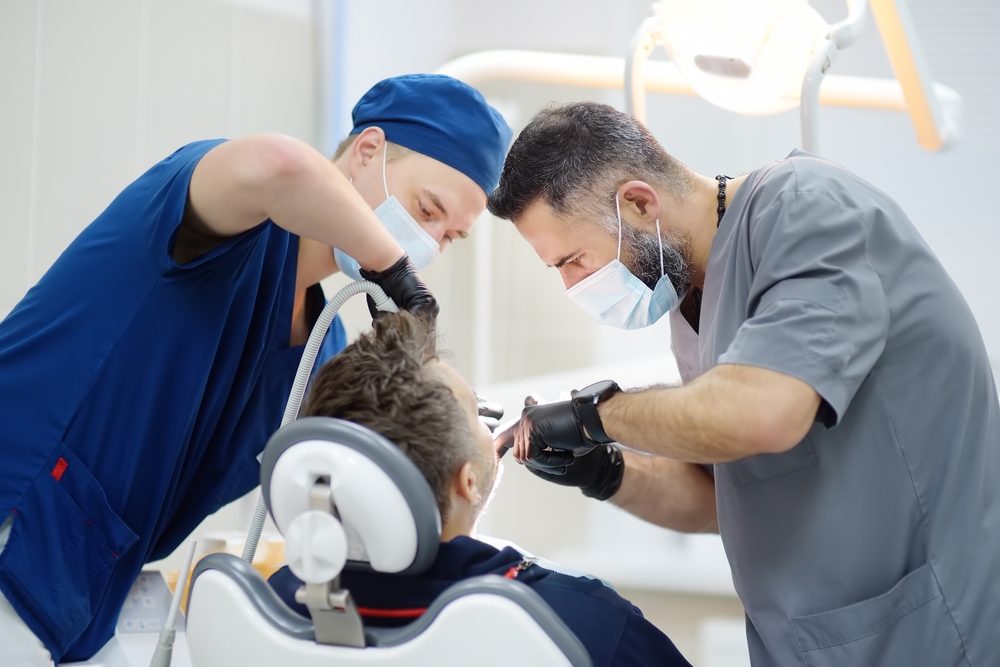
A tooth that cannot be saved can keep causing pain and infection until it comes out, and the extraction itself is often the shortest part of the process. Surgeons remove a tooth when decay, gum disease, a fracture, or other damage is beyond repair.
Wilshire Oral Surgery and Implant Center provides tooth extractions with a plan for what comes next, whether that is a dental implant, a bone graft, or simply a healthy healing site. Our surgeons explain each step so you know what to expect before you sit in the chair.
Why Might a Tooth Need to Come Out?
Researchers who tracked 1,357 routine extractions at university dental clinics in 2024 included teeth that could not be saved because of cavities, gum disease, root problems, restorative needs, or orthodontic plans. Deep fractures, injury, and crowding before orthodontic treatment are other common reasons.
Impacted third molars call for a different surgical plan, which is why our team treats wisdom teeth removal as its own procedure.
What Happens During a Tooth Extraction?
Every extraction follows the same basic path, though the details change with the tooth and your comfort needs.
Before the Procedure
We review your medical history, medications, and allergies, then take images to check the tooth and the bone around it. When a tooth sits close to a nerve or sinus, a cone beam scan can show the exact position. Tell us about blood thinners or other medications so we can plan safely, and share how you feel about the procedure, since comfort options range from local numbing to sedation.
During the Extraction
Your surgeon numbs the area so you feel pressure but not pain, then loosens the tooth with an elevator and removes it with forceps. Some teeth are sectioned into smaller pieces for gentler removal. If you feel anxious or need several teeth removed, ask about IV sedation or general anesthesia.
How Can You Recover Comfortably?
The first day sets the tone for healing, so a few habits matter most:
- Gauze: Bite down gently on gauze to control bleeding, and change it as directed.
- Ice: Apply an ice pack in 15-minute intervals during the first 24 hours to limit swelling.
- No straws or smoking: Suction and smoke can dislodge the blood clot that protects the socket.
- Soft foods: Choose soft foods and avoid hard or sticky items for at least the first day.
- Saltwater rinses: Rinse gently with warm salt water after the first 24 hours, without spitting.
Swelling and soreness usually settle over the first few days, and our written post-operative instructions cover each step in detail. In the 2024 study above, dry socket affected about 1 percent of routine extractions, and pain that stayed high for more than two days was a warning sign. The study also found dry socket was more common after complex extractions, which is one reason we plan difficult cases carefully. Your surgeon prescribes pain medication or antibiotics only when your situation calls for them. Call our office if your pain grows worse instead of better.
How Do You Know It Is Time to See a Surgeon?
Persistent tooth pain, swelling in the gums or face, a cracked tooth, or a tooth that has become loose can all signal a problem that needs attention. Waiting may allow infection to spread to nearby teeth and bone.
An exam and imaging show whether the tooth can be saved or whether removal is the safer choice. If extraction is the right step, we explain your options for sedation, healing, and tooth replacement before we begin.
What Comes After an Extraction?
If you plan to replace the tooth, timing matters. Placing a bone graft at the time of extraction may help preserve the ridge, which keeps your options open for a future dental implant.
Even if you do not replace the tooth right away, ask your surgeon about neighboring teeth, because gaps can allow teeth to shift over time. We also review how to keep your remaining teeth and gums healthy while the site heals.
Schedule Your Extraction Consultation With Wilshire Oral Surgery and Implant Center
Knowing the steps takes much of the worry out of an extraction. Wilshire Oral Surgery and Implant Center offers same-day surgery availability and IV sedation, and we accept major PPO plans, so you can plan your care with fewer unknowns. Our approach is individualized, and we treat only what you need.
Dr. Jonathan Shadi grew up in West Los Angeles, earned his degree from UCLA, attended the University of Southern California School of Dentistry, and completed his residency in Oral and Maxillofacial Surgery at UCSF-Fresno in 2014. If a tooth is bothering you, contact our team through our online contact form.